
What Ignoring This Costs You This Season
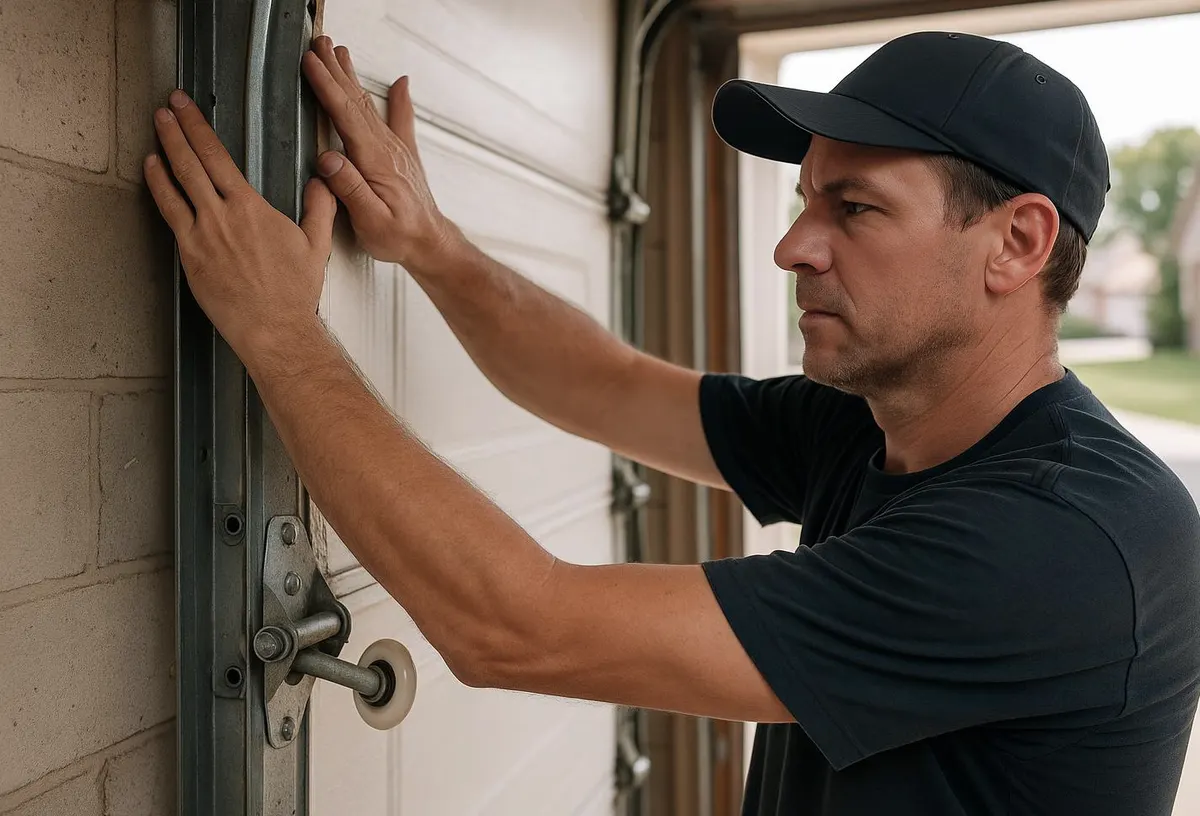
Hurricane season doesn't wind down until the end of November, and that means more power outages are still ahead for Archer, Newberry, and the rest of Alachua County. When the power drops and a car is trapped inside a closed garage, most homeowners reach for the red emergency release cord without a second thought. Most of the time that's fine. But every year, a smaller number of homeowners pull that cord on a door with a broken or weakened spring, and the door drops fast and hard — sometimes onto a car roof, a bumper, or worse, a hand or foot that got in the way. A single-car door can weigh 130 to 200 pounds; a double can run 300 pounds or more. Ignoring how this cord actually works doesn't just risk an inconvenience. It risks a trip to urgent care or a cracked windshield.
What the Release Cord Is Actually For
The cord with the red handle disconnects the trolley from the opener's drive carriage. Once disengaged, the door is no longer attached to the motor and can, in theory, be lifted and lowered by hand. It exists for exactly three situations:
- The power is out and you need to get a vehicle in or out
- The opener itself has failed (stripped gear, dead circuit board, burned-out motor) but the door itself is sound
- Someone is trapped inside the garage and the door won't open any other way
That's it. It is not a troubleshooting tool for a noisy door, a slow door, or a door that drifts open on its own. Pulling it in those cases doesn't fix anything — it just removes the motor from the equation and leaves you lifting a heavy door by hand, often incorrectly.
When Pulling It Makes Things Worse
A garage door spring does almost all the lifting work. The opener just provides a little extra push. When the spring is intact and properly tensioned, a disengaged door should lift smoothly and stay roughly where you leave it. When the spring is broken, overstretched, or badly rusted from years of humidity exposure, that balance disappears. Pull the release cord on a door like that while it's in the up position, and there's nothing holding it there. It free-falls.
This is the scenario that causes real injuries. Signs your spring is already compromised include:
- The door feels unusually heavy when lifted manually, even a few inches
- You hear a loud bang from the garage (a classic sign a torsion spring has already snapped)
- The door looks crooked or tilted on one side when open
- Visible rust or a gap in the coil of the spring itself
If any of those apply, do not pull the emergency release while the door is open. Lower the door fully first, using the opener if it still runs, or leave it where it is and call for a spring repair instead of improvising. A door resting on the ground when you disengage it can't fall on anyone.
The Humidity Factor
Afternoon downpours and the general moisture load in this part of Florida accelerate rust on springs, hinges, and the release mechanism itself. A cord or trolley latch that's corroded can bind, release unevenly, or fail to re-engage properly once you push the arm back down. That uneven release is another way a door can drop faster on one side than the other, torquing the track and bending it — an off-track repair you didn't need to create.
How to Use the Cord the Right Way
- Close the door first. Always disengage the opener with the door fully down whenever possible. This is the single biggest safety habit to build.
- Pull straight down, not at an angle. Angled pressure can bend the arm or damage the trolley.
- Lift the door manually in a slow, controlled motion and check that it stays in place when partially open. If it slides or drops on its own, stop — that's your sign the spring is failing.
- To reconnect, push the arm back toward the opener rail and run the door through one open-close cycle under power to confirm it re-engaged. A door that opens but won't close with the opener usually means the trolley didn't latch.
A Pre-Storm Habit Worth Adopting
Before the next tropical system threatens an extended outage, test your release cord once with the door closed. Confirm you can disengage and re-engage it without force. Label it if household members aren't familiar with its location. This takes five minutes and means you're not learning how it works for the first time in the dark during a storm.
When to Call Precision Garage Door of Archer
If your door feels heavy, drops unevenly, or you've noticed rust around the spring or release hardware, don't keep testing it by hand. That's exactly the setup that leads to a dropped door or a bent track. Our Garage Door Spring Repair technicians can assess spring tension and replace worn components before the cord becomes a liability instead of a safety feature. If it's just been a while since anyone looked at the hinges, rollers, and release mechanism, our Garage Door Maintenance & Tune-Up service covers all of it in one visit, which matters more here than in drier climates given how fast humidity and salt air work on metal hardware.
If your garage door's emergency release isn't behaving the way it should, call Precision Garage Door of Archer. We serve Archer, Gainesville, Newberry, Bronson, Williston, Trenton, Alachua, and High Springs, and we'll have a technician out to check it before it becomes a bigger problem.